Consuming Sea Turtle Meat: Health Risks and Conservation Impacts
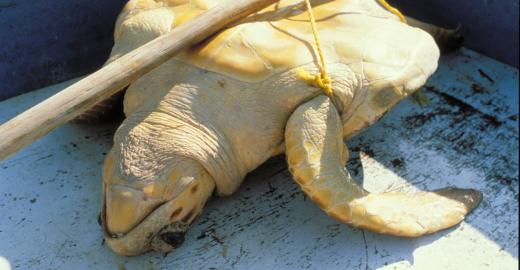
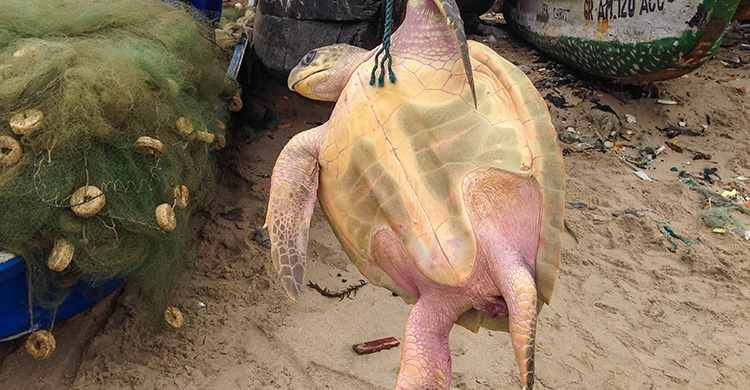
4 December 2024 - In a recent tragic incident in the Philippines, three people lost their lives and over 30 others were hospitalized after consuming a stew made with marine turtle meat. This tragic event is not an isolated incident, with the consumption of sea turtle meat leading to over 2400 known cases of illness and 420 fatalities worldwide since 1900 (Semmouri, Janssen & Asselman, 2024). The meat is viewed as a delicacy in some regions. It is used by indigenous peoples with right to take, but also used as food source by impoverished local communities in developing countries. However, the meat poses a fatal risk due to a condition called chelonitoxism. This rare form of food poisoning stems from toxins accumulated by often seemingly healthy turtles through their diet. Symptoms in consumers range from nausea and vomiting to severe neurological and organ complications, with fatal outcomes in severe cases (Ingram et al., 2022; Semmouri, Janssen & Asselman, 2024).
The dangers of consuming marine turtle meat, however, extend beyond chelonitoxism. Sea turtles can harbour high concentrations of heavy metals, organochlorines, and other environmental contaminants due to their long lifespan and diet. These substances can exceed international food safety standards, posing risks of chronic diseases such as cancer and neurological disorders to humans (Semmouri, Janssen & Asselman, 2024).
Despite their ecological importance and legal protection in most places where sea turtles are consumed, there is evidence of significant declines in population and nesting due to past and present exploitation in many countries (Ingram et al., 2022). As a result of this and other threats, all seven species of sea turtles are considered endangered or even critically endangered. Turtles are essential for marine ecosystems, maintaining healthy seagrass beds and coral reefs. However, threats such as habitat destruction, bycatch in fishing operations, and illegal hunting have severely depleted many populations. The cultural and economic reliance of coastal communities on turtle meat and eggs adds complexity to conservation efforts, as drivers of turtle meat and egg consumption are not only traditional practices, but are exacerbated by poverty and scarcity of alternatives for nutrition in many coastal communities (Ingram et al., 2022; Semmouri, Janssen & Asselman, 2024).
The Philippine incident underscores the intersection of public health and conservation. Illegal hunting of marine turtles for food not only threatens biodiversity but also jeopardizes human lives. Public education campaigns are crucial to raise awareness of the health risks associated with turtle meat. Encouraging alternative livelihoods and sustainable food sources for communities dependent on marine turtles is equally vital. For example, after another poisoning incident in the Philippines in 2013, a community assembly was organized by the Municipal Health Office and Department of Health to educate villagers on the law prohibiting the killing and consumption of marine turtles and the associated dangers (Semmouri, Janssen & Asselman, 2024 and sources within). At other sites around the world, successful recovery of depleted nesting populations has been attributed to protecting nest sites from egg collection (Ingram et al., 2022 and sources within). At other sites, managed harvest of eggs has been sustainable and created increased stewardship of nesting animals (Ingram et al., 2022 and sources within).
Tackling the twin challenges of health risks and conservation requires robust legal frameworks, regional cooperation, and community involvement. The IOSEA Marine Turtle MOU aims to integrate conservation with public health and sustainable development goals. Governments, NGOs, and local stakeholders must work together to enforce existing protections, restore habitats, and empower communities to transition away from unsustainable practices. Top–down legal restrictions alone are unlikely to be sufficient in many communities that experience poverty, where cultural values are not understood, and management capacity is low (Ingram et al, 2022). Active management interventions, supported by local communities, are critical to ensuring the sustainability of uses of aquatic wild meat for sustenance, maintenance of culture and tradition, and improved livelihoods (Ingram et al., 2022).
The Work Programme 2024-2028 of the IOSEA Marine Turtle MOU contains a comprehensive strategy to address threats to marine turtles, combining research, enforcement, community engagement, and sustainable alternatives, while respecting cultural practices and supporting local communities. Regarding the take and trade of marine turtles, the programme focuses on increasing the understanding of drivers of marine turtle harvest, by conducting community surveys. Such research can inform tailored, practical solutions to reduce unsustainable practices. Another focus is on closing legislative gaps and improving enforcement. Awareness-raising and education are additional important aspects, making sure all stakeholders are informed about conservation laws, health risks and the importance of protecting turtles. Communities reliant on turtle harvesting need support with the development of alternative livelihoods that are socially and economically viable, with the goal of creating lasting benefits for both people and marine turtles. The MOU and the Single Species Action Plan for the Hawksbill Turtle (Eretmochelys imbricata) in South-East Asia and the Western Pacific Ocean Region promote the cooperation across the region that is required to tackle the multi-faceted problem of take and use of marine turtles.
To address the global issue of widespread wild meat takes of a wide range of marine and freshwater species, a working group on Aquatic Wild Meat was established in 2018 under the CMS Scientific Council. The working group is tasked with ensuring that Parties to CMS received the information needed to inform effective management measures. That includes supporting studies on the human dimensions of aquatic wild meat use, helping to close gaps in data on aquatic wild meat use by supporting quantitative assessments of consumption and trade and on demand and trade pathways. Also important is the assessment of the efficacy of existing legislation and to which degree enforcement capacity can address unsustainable harvests.
Marine turtles are more than cultural symbols or ecological keystones—they are indicators of the health of marine ecosystems. The tragedy in the Philippines serves as a stark reminder of the risks of consuming turtle meat and the urgency of conserving marine turtle species. By emphasizing conservation alongside health, both biodiversity and human well-being are safeguarded, ensuring that marine turtles continue to thrive for generations to come.
More details about the health risks of marine turtle consumption and the widespread use of aquatic wild meat can be read here:
Ingram, D.J., Prideaux, M., Hodgins, N.K., Frisch-Nwakanma, H., Avila, I.C., Collins, T., Cosentino, M., Keith-Diagne, L.W., Marsh, H., Shirley, M.H., Van Waerebeek, K., Djondo, M.K., Fukuda, Y., Glaus, K.B.J., Jabado, R.W., Lang, J.W., Lüber, S., Manolis, C., Webb, G.J.W., Porter, L. (2022). Widespread Use of Migratory Megafauna for Aquatic Wild Meat in the Tropics and Subtropics. Frontiers of Marine Science, 9, 837447. https://doi.org/10.3389/fmars.2022.837447
Semmouri, I., Janssen, C.R. & Asselman, J. (2024). Health risks associated with the consumption of sea turtles: A review of chelonitoxism incidents and the presumed responsible phycotoxins. Science of the Total Environment, 954, 176330. https://doi.org/10.1016/j.scitotenv.2024.176330